


Chef’s Knife: Versatility in the Kitchen
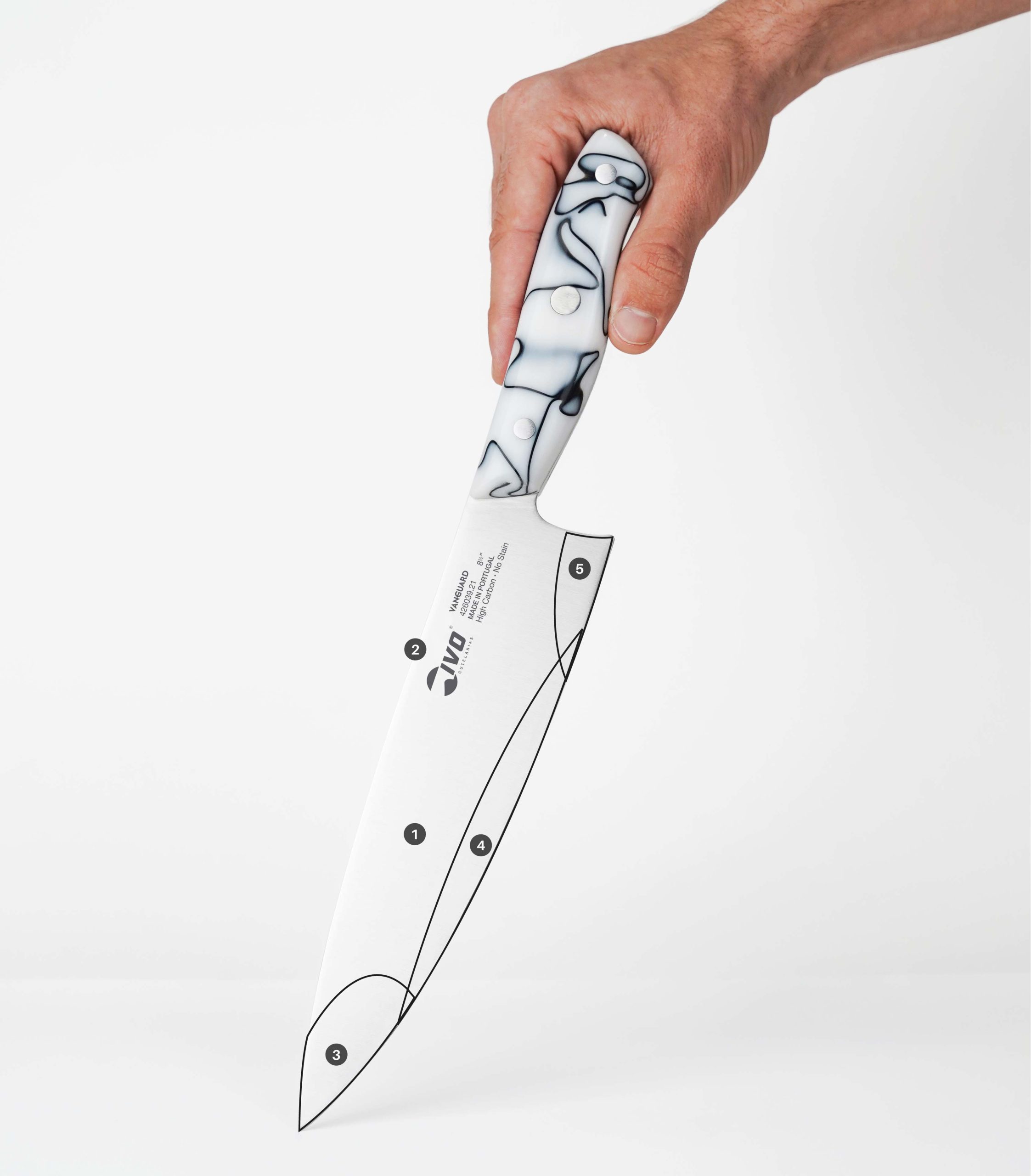
The chef’s knife is one of the most essential tools in any kitchen. It adapts to a wide variety of tasks, from delicate slicing to more demanding cutting work. Understanding the different parts of the blade and how to use them correctly allows you to get the most out of this type of knife.
01 — Blade Side
The Large Flat Surface
The blade side, meaning the large flat surface, is used to crush and shape ingredients. It is commonly used when preparing foods such as garlic and cuts of meat. It is also practical for scooping and transferring chopped ingredients from the cutting board to the pan.
02 — Spine
Strength with Control
The sturdy spine of the blade allows additional force to be applied when necessary. This part of the knife can be used to crack small bones or open shellfish with greater control and safety. It is one of the features that reinforces the chef’s knife versatility in everyday cooking.
03 — Tip
Precision in the Details
The knife tip is ideal for delicate and precise tasks. It works especially well for cutting smaller ingredients such as onions, garlic, and mushrooms. Its precision makes detailed and refined cuts easier in many culinary preparations.
04 — Center of the Blade
The Main Cutting Area
The center of the blade is the primary cutting area and can be used for all types of ingredients, both soft and hard. Thanks to the slightly curved blade shape, this section is especially effective for chopping ingredients such as leeks, parsley, and onions using a smooth rocking motion.
05 — Rear of the Blade
Efficiency Under Pressure
The rear section of the blade allows stronger pressure to be applied, making it especially useful for cutting hard and resistant foods. This characteristic ensures greater efficiency and control during demanding kitchen tasks.